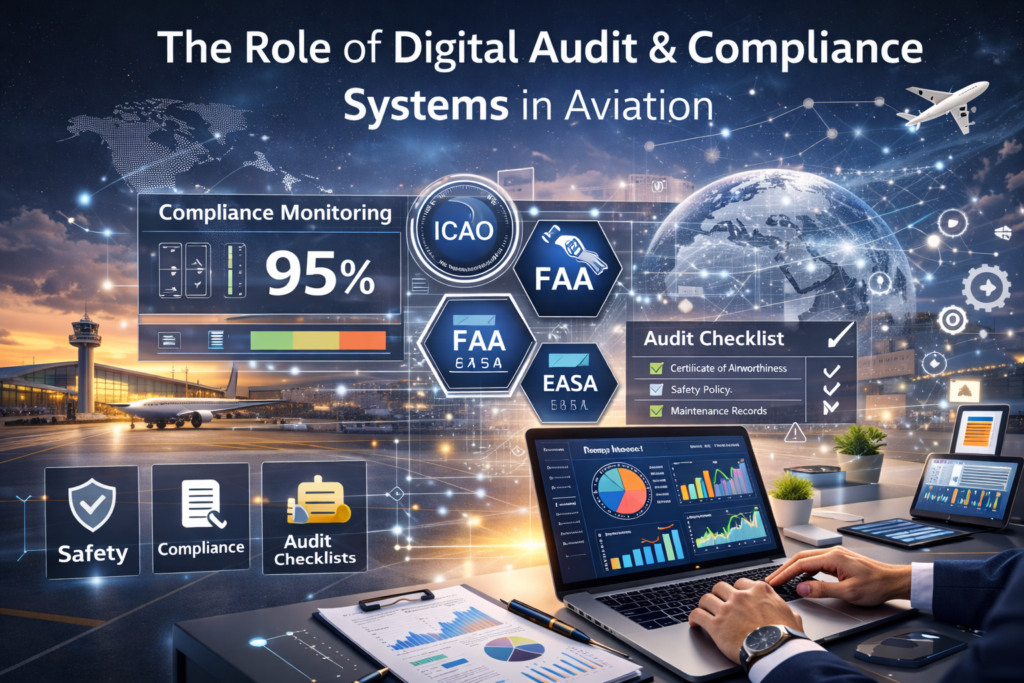
Compliance is a critical part of aviation operations. Airlines and aviation organizations must comply with international aviation authorities such as ICAO, FAA, and EASA regulations.
Managing these compliance requirements manually can be complex and time-consuming. Digital audit and compliance management systems help organizations streamline regulatory processes and maintain compliance efficiently.
Importance of Aviation Compliance
Regulatory compliance ensures that aviation operations follow established safety standards and operational guidelines. Failure to comply with these regulations can result in:
-
Operational disruptions
-
Regulatory penalties
-
Safety risks
-
Loss of reputation
A digital compliance platform ensures that organizations stay aligned with regulatory requirements.
Key Features of Digital Compliance Systems
Automated Audit Scheduling
Organizations can plan and manage internal audits efficiently using automated scheduling tools.
Document Management
All regulatory documents, manuals, and policies can be stored and accessed securely.
Compliance Tracking
Digital platforms track compliance status and notify teams about pending actions.
Real-Time Reporting
Management teams can monitor compliance performance using real-time dashboards.
Advantages of Digital Audit Platforms
-
Improved regulatory compliance
-
Reduced administrative workload
-
Faster audit reporting
-
Better visibility into compliance status
These systems help aviation companies maintain transparency and accountability in their operations.
Conclusion
As aviation regulations continue to evolve, organizations need smarter tools to manage compliance efficiently. Digital audit and compliance systems provide aviation companies with the technology needed to stay compliant, efficient, and safe.